 ROOT PARTY
Blog · November 22, 2026 · 5 min read
12 native edible plants for gardens in eastern North America
Pawpaw, serviceberry, elderberry and nine more native edible plants for eastern North America, with what each needs and what to know before you eat it.
Native edible plants do two jobs at once. They feed you, and they feed the insects and birds that evolved alongside them. Most are also used to your local weather and soil, so once they settle in they ask for less watering and fuss than many garden crops.
Here are twelve that grow across much of eastern North America, from trees down to ground covers. Ranges vary, so check that a plant is native to your own area before you buy it. New to layered planting? See what a food forest is.
Native fruit and nut trees
1. Pawpaw (Asimina triloba)
A small understory tree with large, custard-like fruit that tastes somewhere between banana and mango. Pawpaw tolerates partial shade, especially when young. You'll usually need two different varieties for fruit. Eat only the ripe flesh: the seeds and skin shouldn't be eaten, and a small number of people get an upset stomach from the fruit, so try a little first.
2. American persimmon (Diospyros virginiana)
A tough, drought-tolerant tree with sweet orange fruit in fall. The fruit must be fully soft and ripe. An unripe persimmon is so astringent it dries out your mouth. Most wild trees are either male or female, so plant more than one, or buy a named variety that fruits on its own.
3. Serviceberry (Amelanchier species)
Also called juneberry or shadbush. A small tree or large shrub with white spring flowers and sweet berries in early summer that taste like a mild blueberry. It fits a small yard, and the birds will compete with you for the harvest.
4. American hazelnut (Corylus americana)
A multi-stemmed shrub that makes a good hedge and bears small, sweet nuts. Plant at least two for pollination. It handles sun or light shade.
Native berries and shrubs
5. Highbush blueberry (Vaccinium corymbosum)
The parent of most garden blueberries is a native shrub. It needs acidic soil, so test yours before planting. Two or more varieties give bigger crops.
6. American elderberry (Sambucus canadensis)
A fast-growing shrub for damp spots, with flat clusters of flowers and dark purple berries. The berries should be cooked before eating, and the leaves, stems, roots and unripe berries are toxic. Cooked into syrup or jam, the ripe berries are a classic.
7. Black raspberry (Rubus occidentalis)
Arching canes with dark, rich berries in early summer. It spreads by rooting at the cane tips, so give it a spot where that's welcome, or prune the tips.
8. Spicebush (Lindera benzoin)
A shade-tolerant shrub of moist woods. The leaves and twigs make a fragrant tea, and the red berries can be dried and used as a spice. It's also the host plant for the spicebush swallowtail butterfly. You need male and female plants for berries.
Native herbs, roots and ground covers
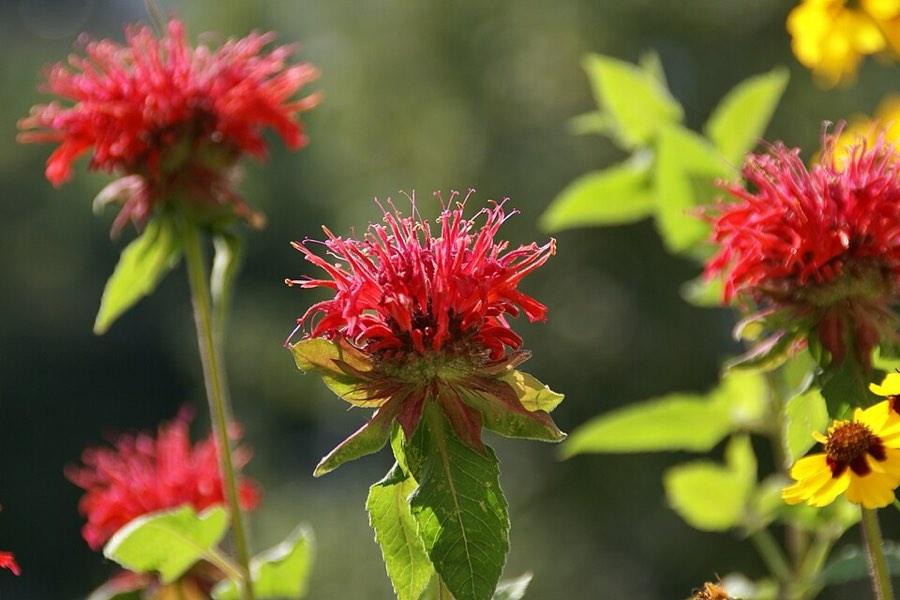
9. Bee balm (Monarda didyma and Monarda fistulosa)
A mint-family perennial that hummingbirds and bees love. The leaves and petals are edible and are traditionally used for tea. It spreads steadily, and good airflow helps prevent powdery mildew.
10. Wild strawberry (Fragaria virginiana)
A low, spreading ground cover with small, intensely flavored berries. It's one of the parents of the modern garden strawberry and works well under shrubs and fruit trees.
11. Sunchoke, or Jerusalem artichoke (Helianthus tuberosus)
A tall native sunflower grown for its knobby tubers, which are harvested after frost. It spreads aggressively from any tuber left in the ground, so plant it where you can contain it. The tubers give some people gas, so start with a small serving.
12. Groundnut (Apios americana)
A climbing vine in the bean family with strings of small tubers and fragrant flowers. It fixes nitrogen in the soil. The tubers should be cooked, never eaten raw. It can spread, so give it a trellis and some room.
Before you eat anything
How to buy native plants
- Buy nursery-grown plants. Don't dig plants from the wild. Wild populations of some edible natives, such as ramps, have been badly overharvested.
- Look for local native plant sales. Native plant societies and conservation districts often run them in spring and fall.
- Ask where the plant was grown. Plants raised from seed collected in your region are best adapted to it.
- Check the scientific name. Common names overlap, and some "wild" plants sold in garden centers are not native at all.
Fitting native edibles into a garden
You don't need a separate native garden. Tuck serviceberry or hazelnut into a hedge, put blueberries where a foundation shrub would go, and use wild strawberry as a ground cover. Or build a small backyard food forest around a pawpaw or persimmon.
Root Party is built to help with exactly this. Its plant guide, projectG.A.I.A., covers 20,000+ plants native to North America and can tell you which suit your zone and light, and which parts of a plant are edible or toxic. See how it works for home growers.
Frequently asked questions
What is the easiest native edible plant to grow?
Serviceberry and black raspberry are among the easiest. Both tolerate a range of soils, fruit within a few years, and need little care once established.
Can I grow native edible plants in the shade?
Some. Pawpaw and spicebush grow naturally under taller trees and tolerate partial shade, though pawpaw fruits best with more sun. Most berries want at least half a day of sun.
Are native plants safer to eat than other plants?
No. Native doesn't mean safe. Many native plants are toxic, and some edible ones have toxic parts or need cooking. Identify every plant with certainty and check how it must be prepared.
Do native edible plants need fertilizer?
Usually very little. A yearly layer of leaf mulch or compost is enough for most. Blueberries are the exception on this list, since they need acidic soil to take up nutrients.
Where can I find out which plants are native to my area?
Your state's native plant society and your local extension office both keep lists. In Root Party, GAIA can filter plants by where they're native.
Keep reading