 ROOT PARTY
Blog · November 22, 2026 · 4 min read
Fruit tree guilds: what to plant under and around a fruit tree
A fruit tree guild is a ring of companion plants that feed, mulch and protect the tree. See what to plant under apple trees and other fruit trees, with layouts.
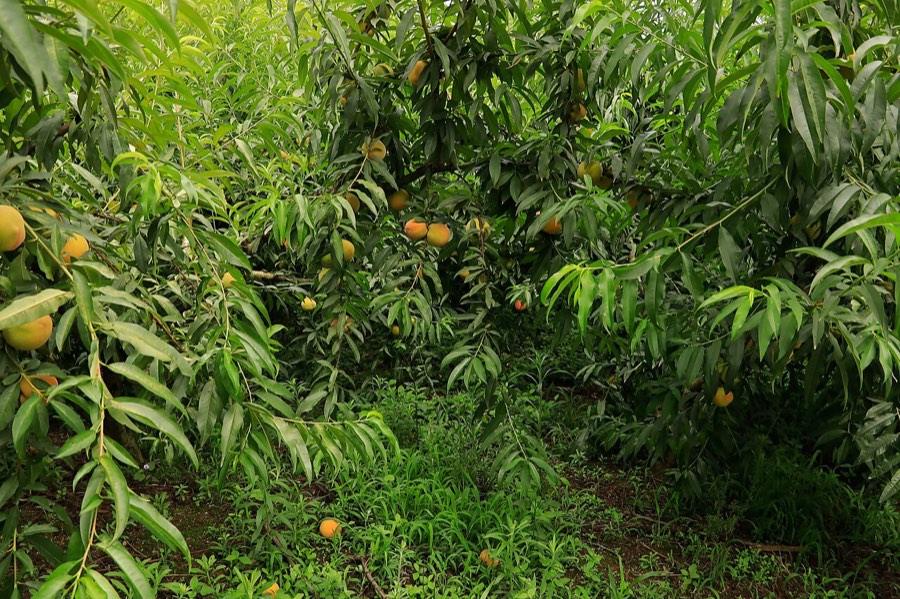
A fruit tree guild is a group of plants grown around a fruit tree to help it. Each one has a job: bringing in pollinators, making mulch, covering the soil or adding nitrogen. Together they replace the bare circle of grass that most fruit trees sit in.
A guild is also the building block of a food forest. Plant one, and you have the smallest food forest there is.
Why plant under a fruit tree at all?
Lawn grass is a poor neighbor for a fruit tree. It competes for water and nutrients near the surface, and it needs mowing right where the tree's shallow feeder roots are. A guild swaps the grass for plants that give something back, and it turns one harvest into several.
The jobs in a fruit tree guild
You don't need a plant for every role. Pick one or two from each group that suit your site.
Pollinator plants
Fruit trees need insects to set fruit. Plants that flower before, during and after the tree's bloom keep pollinators around all season.
- bee balm, mountain mint and anise hyssop
- yarrow and other flat-topped flowers, which also attract beneficial insects that eat pests
- spring bulbs such as daffodils for early bloom
Mulch makers
These grow a lot of leaf that you cut and drop in place a few times a year.
- Comfrey is the classic. Choose a sterile variety such as 'Bocking 14', because common comfrey spreads by seed and is very hard to remove. Comfrey is for mulch, not for eating.
- rhubarb, whose big leaves can be laid down as mulch after you harvest the stalks (the leaves are toxic to eat)
Nitrogen fixers
Plants in the bean family host bacteria that take nitrogen from the air. Some of it reaches the soil when the plants are cut back or die down.
- white clover as a living ground cover
- lupines or native wild indigo for height
- annual peas and beans grown around a young tree
Ground covers
Low plants shade the soil, hold moisture and crowd out weeds.
- strawberries
- creeping thyme in sunny, dry spots
- wild ginger or violets in shade
Aromatic plants
Chives, garlic and other strongly scented plants are a traditional part of guilds and are often said to confuse pests. The evidence for that is mixed, but they're useful herbs that take little room and flower for pollinators.
A simple apple tree guild
For a semi-dwarf apple, working out from the trunk:
- A clear circle of about a foot around the trunk, covered in wood chip mulch. Keep plants and mulch off the bark.
- A ring of chives or garlic chives just outside it.
- Two or three comfrey plants spaced around the tree, about halfway to the edge of the canopy.
- Bee balm and yarrow on the sunny side.
- Strawberries or white clover filling the gaps as ground cover.
- Currants or gooseberries at the edge of where the canopy will reach when the tree is grown.
The same pattern works for pear and plum. Stone fruits such as peach and cherry like good airflow, so keep the planting under them lower and looser.
A guild for shade: pawpaw
Pawpaw is a native understory tree that tolerates partial shade. Around it, try spicebush, wild ginger, violets and ferns, with currants or gooseberries where a little more light gets in. For more natives that fit, see native edible plants for eastern North America.
How to plant a guild
- Plant the tree first, at the right depth, and water it in.
- Sheet mulch the circle with cardboard and wood chips to smother the grass. Our guide to starting a small food forest walks through it.
- Add the guild plants through the mulch, starting with the ones farthest from the trunk.
- Don't dig deeply near an established tree. Feeder roots are close to the surface. Under an older tree, use small plants and plugs.
- Water the whole guild through its first year.
Common mistakes
- Crowding the trunk. Plants and mulch against the bark hold moisture and invite rot and rodents.
- Planting aggressive spreaders. Mint, common comfrey and running bamboo will take over. Use clumping or sterile kinds, or keep spreaders in pots.
- Forgetting the tree will grow. Sun-loving plants under a young tree will be in shade in five years. Plan to move them outward.
- Assuming every guild plant is edible. Daffodils, comfrey and rhubarb leaves are all toxic to eat. Know which plants are there to help the tree and which are there for the table.
Plan your guild
In Root Party you can lay a guild out in the garden planner and see how the spacing works before you buy anything. projectG.A.I.A., the plant guide, can suggest companions for your tree that suit your zone and light, and flags which parts of each plant are edible or toxic. See how it works for home growers.
Frequently asked questions
What should you not plant under a fruit tree?
Avoid lawn grass, aggressive spreaders like mint, and large shrubs or vegetables that need deep digging close to the trunk. Also avoid anything that needs heavy watering right against the bark.
How far from the trunk should guild plants be?
Leave about a foot of clear, mulched ground around the trunk. Small plants can start just outside that. Shrubs belong near the outer edge of the tree's future canopy.
Can I plant vegetables under a fruit tree?
Around a young tree, yes: lettuce, peas, beans and herbs do well in the first few years. As the canopy fills in, switch to plants that tolerate shade.
Does comfrey really help fruit trees?
Comfrey produces a lot of leaf that breaks down quickly as mulch and returns nutrients to the soil surface. Claims that its deep roots "mine" minerals for the tree are less well supported, but as a mulch plant it earns its place.
When is the best time to plant a fruit tree guild?
Plant the tree in fall or early spring while it's dormant. Guild plants can go in at the same time, or be added over the following seasons.
Keep reading