 ROOT PARTY
Blog · November 20, 2026 · 5 min read
How to start a food forest in a small backyard, step by step
You don't need acres. A 7-step plan to start a backyard food forest with one fruit tree, sheet mulch and a plant guild, written for the Mid-Atlantic.
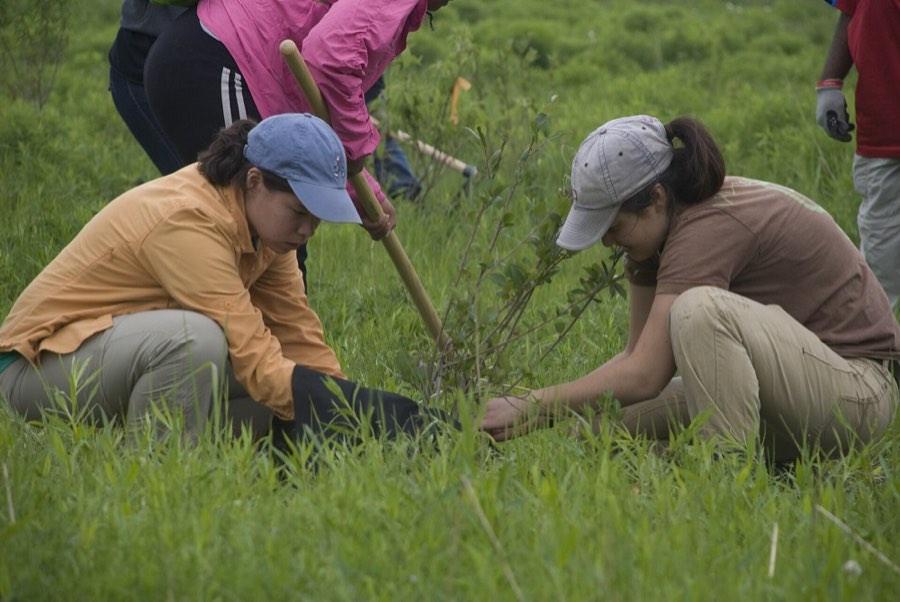
The phrase "food forest" makes people picture acres of orchard. In practice, most backyard food forests start as a single fruit tree with a ring of useful plants around it. A space about the size of a parking spot is enough to begin. Here's how to start a food forest in a small yard, step by step. New to the idea? Read what a food forest is and how the 7 layers work first.
Step 1: Observe your yard before you plant
Spend a few days noticing three things:
- Sun. Most fruit needs at least six hours of direct sun. Note where shadows from your house, fences and neighbors' trees fall, morning and afternoon.
- Water. Where do puddles sit after rain? Where does the soil dry out first?
- Use. Paths people already walk, where kids play, where the dog runs. Plant around those, not through them.
Before you dig anywhere, call 811 (or use your state's online request) to have underground utility lines marked. It's free, and it's required in most places. If you rent or have an HOA, check the rules too.
Step 2: Choose an anchor fruit tree
Choose one tree you'd genuinely love to eat from. For a small yard, look at:
- Semi-dwarf or dwarf apple, pear or plum: manageable size, since the rootstock controls the height.
- Pawpaw: a native fruit tree that tolerates partial shade. You'll usually need two different varieties for good fruit set.
- Serviceberry: a small native tree or large shrub with early berries that birds and people both love.
- American persimmon: a native with sweet fall fruit, though it grows larger over time.
Check the tree's mature width and give it that much room. Many fruit trees also need a second, compatible variety nearby to pollinate. Your nursery or local extension office can tell you which.
Step 3: Build soil with sheet mulching (no tilling)
You don't need to till. The easiest way to turn lawn into a planting area is sheet mulching:
- Mow the grass short and leave the clippings.
- Water the area well.
- Lay plain brown cardboard (tape and stickers removed), overlapping the edges.
- Wet the cardboard, then cover it with several inches of wood chips or leaf mulch.
- Wait. Over a season the grass dies back and the cardboard breaks down.
To plant right away, cut an X in the cardboard where each plant goes. Keep mulch a few inches clear of the tree trunk.
Step 4: Plant a food forest guild around the tree
A guild is a small community of plants that support the tree. Around your anchor tree, add a few from each role:
- Pollinator plants like bee balm, mountain mint or other native flowers bring in the bees your fruit needs.
- Mulch makers like comfrey can be cut back and dropped as mulch a few times a season.
- Ground covers like strawberries or creeping thyme shade the soil and crowd out weeds.
- Pest-confusers like chives and garlic tucked in near the base.
- Shrubs like currants, gooseberries or blueberries at the edge of the tree's future canopy (blueberries want acidic soil, so test first).
Keep it simple: one tree, three to five shrubs and herbs, and a ground cover is a complete first guild.
Step 5: Plant in fall if you can
In the Mid-Atlantic, including Maryland, Virginia and Pennsylvania, fall is often the best time to plant trees and shrubs. Cooler air is easier on new plants, while the soil stays warm enough for roots to grow before winter. Early spring works too. Avoid planting in the heat of midsummer.
Water new plantings deeply about once a week for their first year unless it rains, and keep the mulch topped up.
Step 6: Avoid common food forest mistakes
- Planting too close. It looks sparse at first. Space for the plants' mature size, and fill gaps with annuals for now.
- Invasive plants. Some plants sold at garden centers spread into woods and wild areas, like Callery (Bradford) pear and Japanese barberry, which are invasive across much of the Mid-Atlantic. Check your state's invasive plant list before you buy.
- Assuming everything is edible. Plenty of food forest plants have parts that aren't safe to eat, or are only safe cooked. Confirm before tasting.
- Doing it all at once. Add a layer or two each season. A food forest is meant to grow in stages.
Step 7: Grow it with your neighbors
A small-yard food forest gets better when the block joins in. One neighbor's pawpaw pollinates another's. Comfrey and strawberry runners get passed over the fence. Someone has a pruning saw, someone else has a truck for wood chips.
Root Party is built for exactly that. Plan your guild in the garden planner, ask projectG.A.I.A., our plant guide, which plants suit your zone and light, list spare cuttings, seeds and tools for your neighbors, and start a Grove if your street or community garden wants to plant together.
Frequently asked questions
What is the smallest space for a food forest?
One fruit tree with a ring of supporting plants is a complete small food forest. A dwarf or semi-dwarf tree and its guild can fit in a space roughly the width of the tree's mature canopy, and you can add more guilds over time.
What should I plant first in a food forest?
Start with the tree, since it takes longest to mature, then add fast producers like strawberries, herbs and berry bushes around it so you get a harvest in the first few years.
When is the best time to start a food forest in Maryland?
Fall is often the best time to plant trees and shrubs in Maryland and the rest of the Mid-Atlantic, with early spring as a second choice. Sheet mulching can start any time, and laying it in fall gives it the winter to break down.
Do I need to remove grass to start a food forest?
No. Sheet mulching with cardboard and wood chips smothers the lawn in place, with no digging or tilling, and it adds organic matter to the soil as it breaks down.
Can I start a food forest in a rented yard?
Ask your landlord first. If permanent trees aren't an option, a food forest in large containers, with dwarf fruit trees, berry bushes and herbs, can move with you.
Keep reading